Sustainability Films Vienna | Credible Storytelling
Sustainability,
honestly told.
Trusted by Greiner, Strabag, Plastic Bank.
Sustainability communication stands or falls on credibility.
Marketing-speak works against the brand here, immediately. What counts is honest words and people who stand behind the promise.
Stories that carry stance.
 Case Study
Sustainability
Hard Talks
Greiner
Read case study → Case Study
Brand Documentary
Plastic Bank Manila
Greiner
Read case study →
Image Film
Greiner Blue Plan
Greiner
View project →
Brand Documentary
IRR Brand Documentary
IRR
View project →
Employer Branding
Greiner Sustainability
Greiner
View project →
Employer Branding
Strabag Sustainability Stories
Strabag
View project →Our answer.
Stories that begin with people.
We take the marketing-speak out. We listen before we phrase. We let people speak who actually have something to say. In sustainability communication, every wrong word reads as a pose.
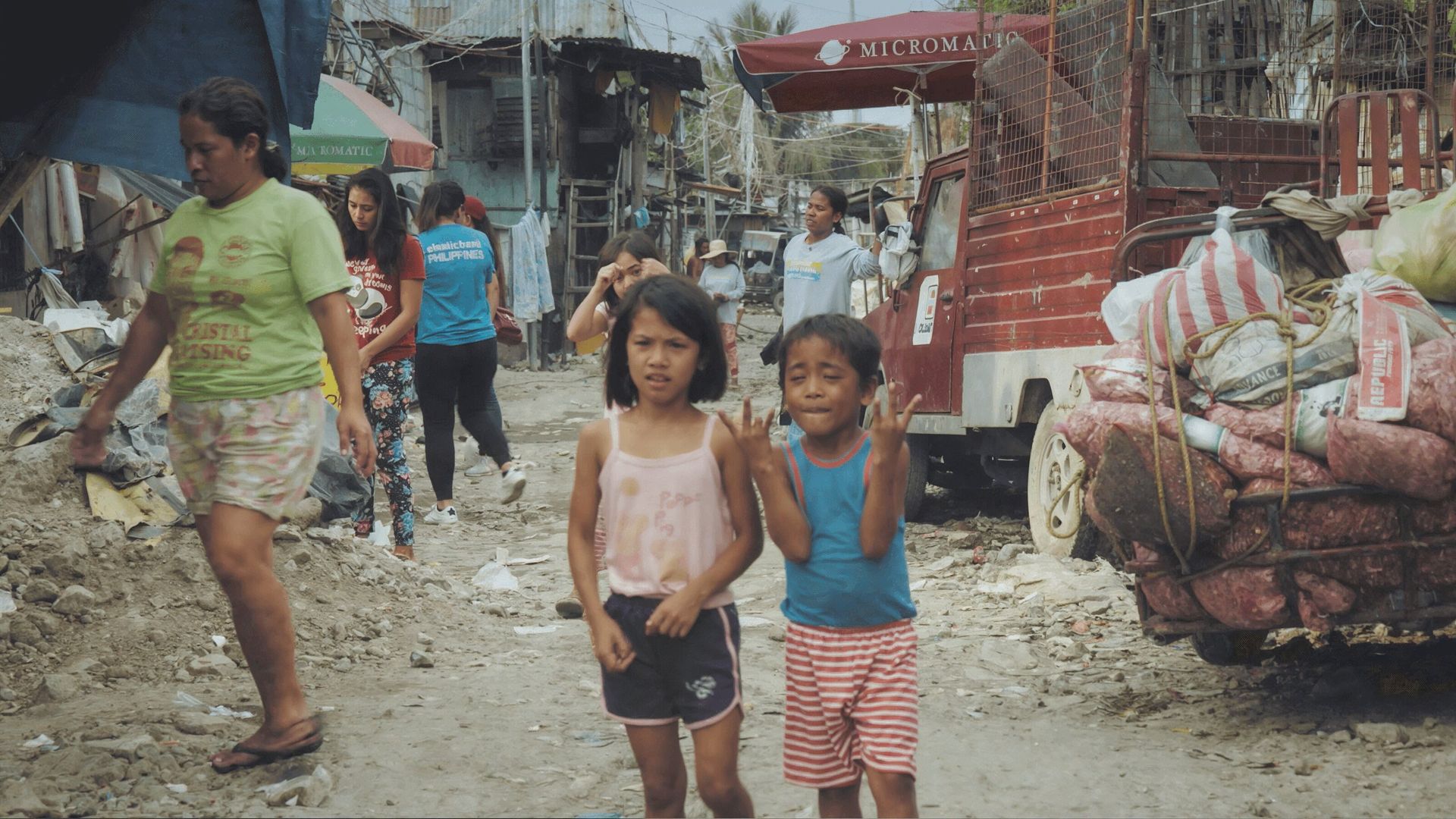
In the Philippines, we spent a week with the Plastic Bank collectors in Manila. We had a script. We shot what unfolded. A documentary that shows reality without instrumentalizing it. The circular-economy logic becomes as clear as the stories behind it.
Sometimes the topic demands the most uncomfortable format. For the Greiner Hard Talks, a plastics processor brought its own executive team in front of the camera to face the industry's hardest questions. Six C-levels, no dodging. With other clients, hundreds of employee interviews have come together over the years, across three continents. Story and values first. Visuals after.
That's the kind of sustainability communication that minimizes greenwashing risk without losing momentum. Credible, because it comes from inside the company. Worth watching, because a good story is allowed to look good.
We let the people at Greiner have their say. With Little Lights as our partner we developed communication formats that stay authentic and credible.
Why this topic.
Sustainability is not just a brief for us.
We work happily on sustainability films because the subject overlaps with what we believe as a studio. Honest, human communication, allowed to look good, but always putting story and values first. For us this is not method, it is stance.
It is not about flipping a company overnight. It is about deliberate action, clear goals, steps that actually take hold. Switching off the light is symbolism. An intelligent room-control system that does the same thing at scale is impact. Both sound good. Only one makes a difference.
That is exactly what we look for in the films we make on the topic. The action behind the message. The person behind the position. The path, not the leap. That is how we build formats that don't just live in the campaign, but hold up internally and externally.
Anyone communicating honestly does not need to get everything right. But what they show has to ring true.
Plain talk.
What we get asked most.
How do you tell sustainability without slipping into greenwashing?
By telling the actions, not the pose. By bringing people in front of the camera who carry the promise daily. And by not dodging uncomfortable questions. Honesty has a visible effect on the credibility of a film, precisely because it is rare.
Can we approach the topic if our core business is not inherently green?
Yes. That was exactly the starting point for Greiner Hard Talks: a plastics processor putting itself publicly to the question of its role. The format works because it does not claim to be sustainable, it transparently shows how the company is working with that question. Stance over gloss.
Which form fits which occasion?
A documentary makes room for depth (Plastic Bank Manila shows that). A statement format collects stance in serial form. An interview series across the workforce makes a topic broadly tangible (Blue Plan, Sustainability Message). Which form fits, we clarify in the first conversation, depending on goal, audience, and the voices available.
How do you handle sensitive shoot situations?
Preparation and improvisation, both have to be there. For Plastic Bank Manila we went into the barangays with a brief and a plan, and at the same time were ready to drop everything when reality told a different story. Accompany rather than stage. Listen before we shoot. Without that level of respect, the stories that should carry such a production never emerge in the first place.
Which form to start with?
Often the format that combines the lowest effort with the highest authenticity: employees in front of the camera, short statements, one after another. From there a series develops, or the next, larger production. The important thing is to clarify values and goal early, so the film does not have to be invented in the edit room.